Eight centuries around College Green
College Green has been part of Bristol’s story for centuries. Today its three acres of grass are overlooked by City Hall, Bristol Cathedral and a statue of Queen Victoria erected in 1887 to mark her Golden Jubilee.
The Cathedral was founded in 1142 as St Augustine’s Abbey and consecrated six years later. Following the Dissolution of the Monasteries, it became the cathedral of the newly created Diocese of Bristol in 1542.
The Green itself was once known as St Augustine’s Green. Beneath its familiar lawns lie historic burial grounds associated with the abbey and the Hospital of the Gaunts.
Behind the Cathedral stands the Abbey Gateway, built around 1170. Its sculptural decoration contains early examples of pointed arches in England.
Bristol’s civic heart
Facing the Green is City Hall, formerly the Council House.
Designed by Vincent Harris and opened by Queen Elizabeth II in 1956, the building is crowned by enormous golden unicorns. Its foundations had originally been laid in 1935, but construction was interrupted by the Second World War.
Before the development, College Green was considerably more elevated than it is today. The land crowned a low hill descending towards the Centre and was separated from Brandon Hill by a deep gully.
Nearby Bristol Central Library provides a striking contrast. Completed in 1906 to designs by Charles Holden, it became an influential example of Edwardian Free Style architecture.
From ocean liners to Park Street
Behind City Hall stands Brunel House, originally the Royal Western Hotel.
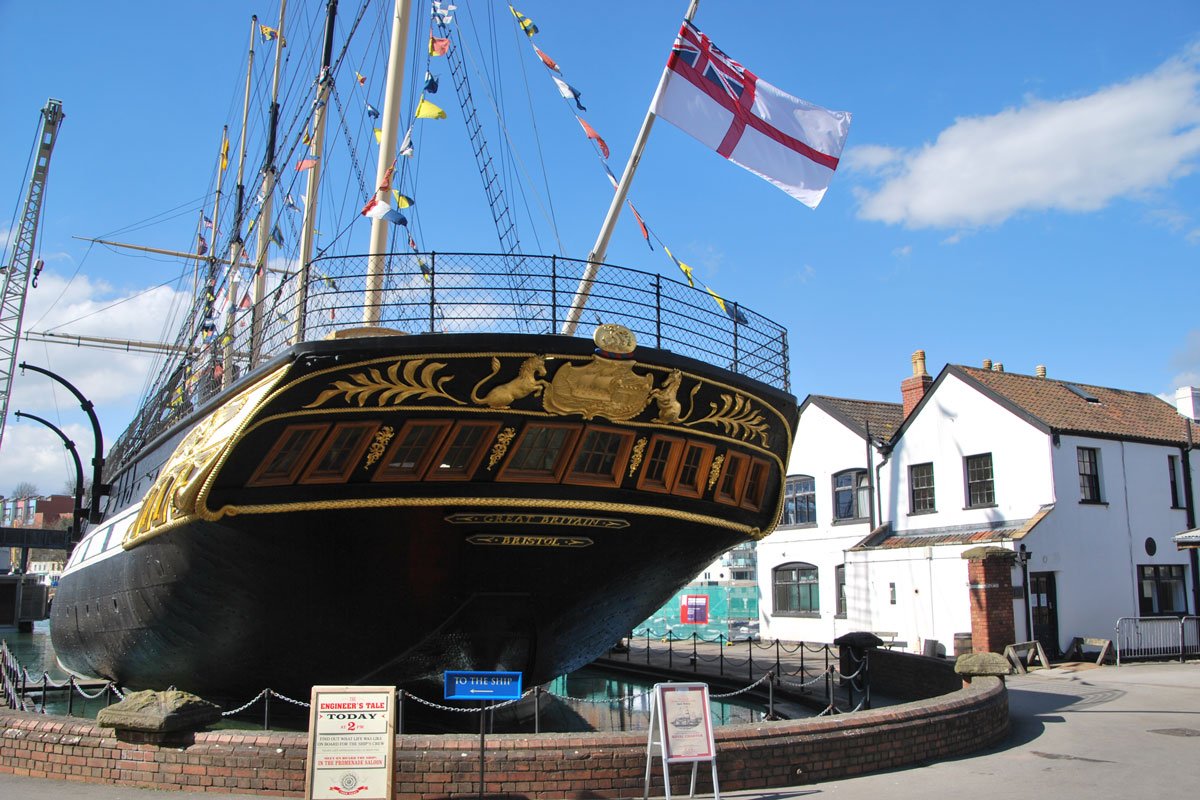
The hotel opened in 1839 and was intended to accommodate transatlantic travellers arriving at Temple Meads before boarding ships — including Brunel’s Great Western — bound for America.
The venture did not prosper. Liverpool and Southampton proved more suitable for the transatlantic liners and the hotel eventually closed in 1855.
Its later uses were rather different, including Turkish and oxygen baths promoted as treatments for an extraordinary range of illnesses.
From here the walk reaches Park Street, first developed in the 1760s as part of the former Bullock’s Park estate. Although badly damaged during wartime bombing, the street retains traces of its Georgian origins.
Life above and below stairs
Just off Park Street stands The Georgian House, built around 1790 for wealthy merchant and plantation owner John Pinney.
Its eleven rooms extend across four floors and reveal very different sides of late 18th-century domestic life — from the basement kitchen where servants prepared meals to the elegant formal rooms occupied by the family above.
Opposite stands St George’s, originally built as a church between 1821 and 1823. Designed in the Greek Revival style by Sir Robert Smirke, architect of the main block and façade of the British Museum, the building is now one of Bristol’s best-known music venues. :contentReference[oaicite:5]{index=5}
Above the city on Brandon Hill
The character of the walk changes again at Brandon Hill.
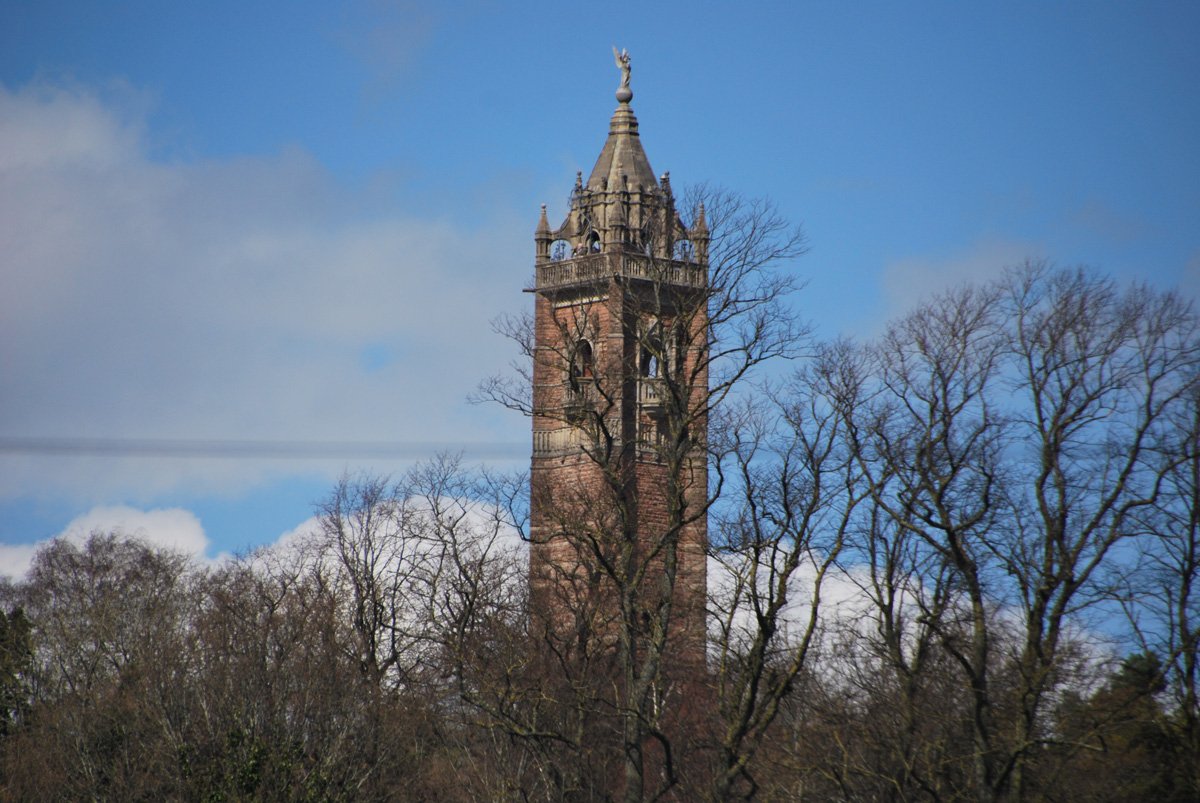
Its 29 acres include parkland, open grassland and a nature reserve, with Cabot Tower rising above them.
The tower commemorates John Cabot’s voyage to Newfoundland in 1497 aboard The Matthew. Climb its 109 steps and the reward is a magnificent view across Bristol.
The hill also carries reminders of a more turbulent city. An old police station dating from 1836 was one of four established following the Bristol Riots of 1831 and the creation of a police force in the city.
What you’ll discover
This walk connects Bristol’s religious, civic and Georgian history within a remarkably compact part of the city.
- College Green — a familiar Bristol space with centuries of history beneath it.
- Bristol Cathedral — founded as St Augustine’s Abbey in the 12th century.
- City Hall — Bristol’s monumental 20th-century civic centre.
- Park Street — Georgian Bristol climbing towards the university quarter.
- The Georgian House — an insight into domestic life in the late 18th century.
- St George’s — Greek Revival architecture transformed into a celebrated music venue.
- Brandon Hill — historic parkland crowned by Cabot Tower.
The complete City Walks Bristol guide follows the route through these streets and spaces, uncovering many more of the buildings, characters and events that have shaped this part of the city.